In 1990s Manchester, Connecticut, a single mother finally built the family she had fought for. Then her five-year-old son began to see visitors no one else could.
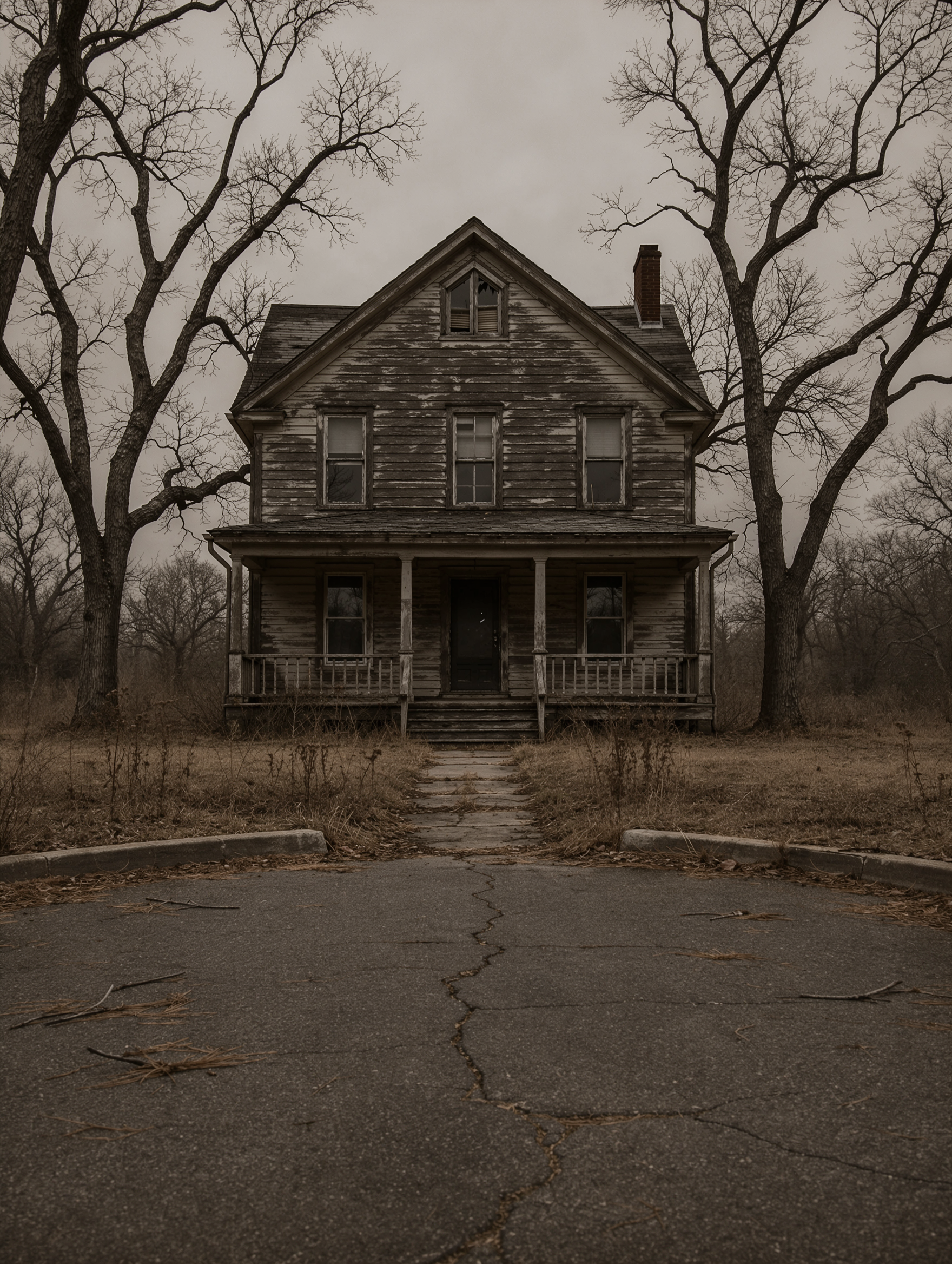
The night was ordinary in the way that only long-awaited nights can be. In Manchester, Connecticut, on a quiet street, in a quiet kitchen, Denice Jones was finishing the last chores of the day: the dishes put away, the counters wiped, the small domestic rituals that close a home like a book closes over its pages. She was a mother of two boys. She was, at last, a wife. Her new husband, Bruce, was a good-natured, gentle man who loved her children as his own, and the life they now shared looked nothing like the years behind her, the years she had spent as a single mother with hardly any time for herself and even less, it seemed, to meet a good man.
Bruce wore a cowboy hat and seemed to have ridden in from some untamed range in the wild west, which was, in a way, what had happened. He was the improbable happy ending to a story that had gone on much too long without one. Standing in her kitchen on that fall night, Denice might reasonably have thought about the trajectory that had carried her to this wonderfully ordinary evening, and how far she had traveled to reach it.
The idyll did not last the evening.
Upstairs, her five-year-old son screamed.
"It was never the house that was haunted."
A Boy in the Corner
She ran. In Michael's bedroom she found him curled into the corner, shaking, in a state that any parent recognizes instantly as beyond the ordinary. Children play pranks. They imagine things. They do not, as a rule, tremble in the dark and lie to their mothers about why.
There had been a man in the room, Michael said. A smiling man, pale beyond sense. He tried to describe the color of the man's skin and reached, in the way of small children, for the nearest true thing: he was crayon-white. The man had touched his shoulder. Then he was gone.
No one believed him at first. Denice searched the room anyway, the closet, the under-bed dark, because that is what mothers do; a stranger in the house was the likelier terror, and she checked for it with her heart hammering. She found nothing. She turned the lights on and held her son, and she was left with the dread that outlasts explanations: Was someone in the house? Was her son ill? Was he making it up? Could a five-year-old make this up?
The timing, she would think later, could hardly have been worse. She had just remarried. She did not want to bring this, whatever it was, into the new marriage. She did not want Bruce to think the family he had joined was troubled, or strange, or haunted. She had raised two boys alone after their father drifted in and out of their lives, and she had learned to solve her problems without anyone's help. Now the problems were not the kind a person solves alone, or at all.
Bruce, for his part, was often away on work in those early weeks. The house, when the visitors came, was hers to defend.
"Spirits, he said, wanted to take him to their side."
The Shape of the Family
It is tempting, in stories like this one, to skip the biography and get to the phenomena. That would be a mistake, because the phenomena arrived in the middle of a life that had already demanded more than its share of endurance.
Denice Jones had been, for years, the kind of mother whose whole day is a logistics problem: food on the table, a roof that held, clothes that fit, and somewhere in the margins of all that, a role model for two boys. Their grandfather and grandmother helped fill that role, but the weight belonged to her. She was not unusual in this; she was only unusual in how completely she carried it. Single parents across the country were doing the same arithmetic in the same years, and many of them, like Denice, did not think of themselves as struggling. They thought of themselves as busy.
The boys were close in the way of children who have been through things together. Kenny, the older brother, barely appears in the account his mother would later set down, but he matters. He was a sensitive boy who cried when his little brother was sick or suffering, and one suspects, from the photograph, a family portrait in which he stands slightly behind the rest, that he learned early what eldest children of hard-pressed mothers learn: that some of the weight is yours now, whatever your size.
There was love in that house. That is the part the horror-movie version never gets right. This was not a family that moved into a house it should have avoided, ignoring the warnings, the way families in films do. This was a family that had finally, at real cost, assembled itself, and then found that something else had assembled around it.
Manchester, and What New England Remembers
Nothing about Manchester, Connecticut, announces itself as haunted. It is an ordinary New England town of the sort that made the late 1990s feel safe: porch lights, school buses, fires crackling in October. Denice herself was not a believer. Ghosts and the paranormal were not things she had ever been interested in; in that era they were a niche taste, the stuff of Unsolved Mysteries reruns, of In Search Of, of a Poltergeist rented on a Friday night. You had to go looking for them. They did not come to you.
But New England keeps its accounts. The state now maintains a Connecticut Haunted History Trail, an official tourism circuit of haunted inns, theaters, cemeteries and lighthouses, and at the darker end of that trail lies a chapter most Americans have never heard of: the Connecticut witch trials, which began in 1647, some four and a half decades before Salem. At least forty-nine people were accused of witchcraft in colonial Connecticut. At least thirty-four were indicted. At least eleven were executed.

Image from CTvisit.com
In 2023, nearly four centuries later, the Connecticut General Assembly formally acknowledged the injustice and apologized to the descendants of the accused. One can call the gesture late, and it was, but apologies have their uses. If there were restless things in that soil, perhaps the naming of the wrong helped settle them.
Denice would not have guessed that any of this had anything to do with her. She was right, as it turns out, though not in the way she thought. What came for her family did not seep up out of the colonial ground. It came, as far as anyone could tell, for her son.
"He didn't invite these events. He simply lived through them."
The Boy Who Wouldn't Die
Long before Michael saw his first visitor, he had already survived something that should have killed him.
He was born in trouble. Within days of his birth he was in intensive care, in and out of life, and the doctors stopped offering good news. The family was told, in effect, to prepare. A priest was called to administer last rites.
It was Denice's brother who stopped him at the door. No, he said. You are not coming in. This boy is going to live.
Michael was transferred by air to a hospital in Washington, D.C., while the family drove hours through the night to reach him. He lived. And Denice, remembering it all years later as the visitors multiplied around her son, remembered something else: that in the worst hours of it, she had prayed, and she had not prayed to God exactly, or not only. She had prayed to her grandfather, a gentle and kind man, dead by then, asking him for one thing. I don't want to lose Michael. Help me.
That night, she dreamed of him. In the dream, her grandfather reassured her. I will take care of it.
The boy lived. She had always taken the dream as a promise kept.
The Photograph
In the days after the bedroom, the apparitions did not stop; they escalated. Michael kept describing the old man, always approaching, always half-emerged, as though pushing up through some thick veil, some surface of water, from one world into another. Always trying to touch his shoulder. Always crayon-white.
Denice did what mothers do when the ground shifts: she reached for normalcy. She told the boys they would get burgers the next day, McDonald's, a treat, and then they would visit their grandparents, and she would talk it through with her mother, and perhaps the world would settle.
At her mother's house, the visit proceeded as visits do. And then, from the living room, Michael shrieked.
He had found a framed photograph on the wall, a picture that was not usually displayed, an old portrait of Denice's grandfather, dead long before the boy was born. Michael pointed at it, jumping, certain, delighted and terrified at once.
That's him, he said. That's the white crayon man. That's the one who tries to touch me.
The boy had never seen the photograph in his life.
What Stands Below
There are two ways to leave a story like this, and the family's account, told in Denice Jones's 2000 book The Other Side: The True Story of the Boy Who Sees Ghosts, insists on the harder one.
The first way is the comfortable way: a haunted house, a family that moved and escaped, a closed chapter. The second way is the one Michael's description keeps pointing toward. The man who touched his shoulder was not a fixture of the property, not a residue of old grief hanging in the wallpaper. He was an old man with a face, a relative, someone with a claim on the boy. He came from somewhere, and he was trying to reach across.
The family would move, in the years that followed, through disbelief, then a strange comfort, then terror, as the visitors multiplied and the bad people, as Michael called them, made their intentions plainer. But the founding fact of the story was already on the wall of Denice's mother's living room, in a frame, smiling.
It was never the house that was haunted.
This account is drawn from the Phenomena Case Files Podcast and from Denice Jones's book "The Other Side: The True Story of the Boy Who Sees Ghosts" (2000). The events described took place in Manchester, Connecticut, in the 1990s. The family's experiences are presented as they were reported; readers may weigh them as they will. What is not in dispute is the boy at the center of it, who never asked for any of this, and the mother who believed him.